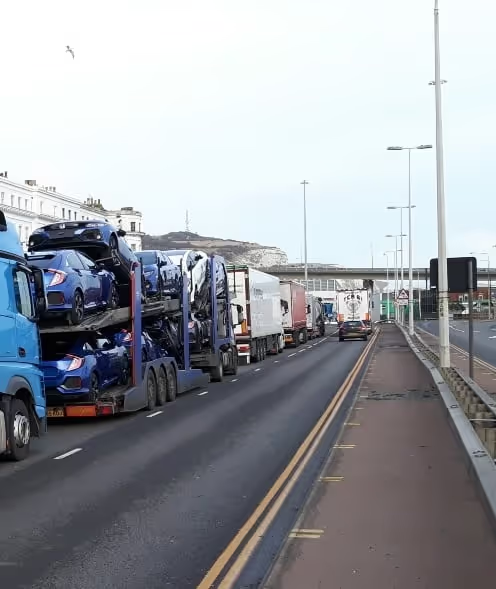
A sustainable location for a truckstop
The proposals have been developed following detailed discussions with planning officers at Dover District Council, and statutory bodies, including KCC Highways, Kent Police, National Highways, Port of Dover, Kent Resilience Forum and Transport for the South East (TfSE) as well as industry bodies such as Logistics UK, and the Road Haulage Association.
The proposals are supportive of national and local policy frameworks highlighting the importance of providing adequate HGV parking infrastructure.
Meeting the needs of the industry
The development of the proposed truckstop, offering improved driver facilities and resilience on the doorstep of the Port of Dover and the Channel Tunnel, have been welcomed by the Dover Harbour Board and Getlink, operators of LeShuttle.
Nationally, the Department for Transport (DfT) highlights the need for appropriately distributed freight facilities that:
Help HGVs comply with statutory working time limits
Address the shortage of parking on the Strategic Road Network (SRN)
Provide an alternative to unsafe and informal parking practices
The Court Wood Interchange proposals directly support these directives and meet industry calls for the development of new parking sites. It will also provide a critical facility for drivers to comply with statutory working time limits, especially those nearing the end of their tachograph hours and delayed by congestion on the road network or cross-Channel ferries.
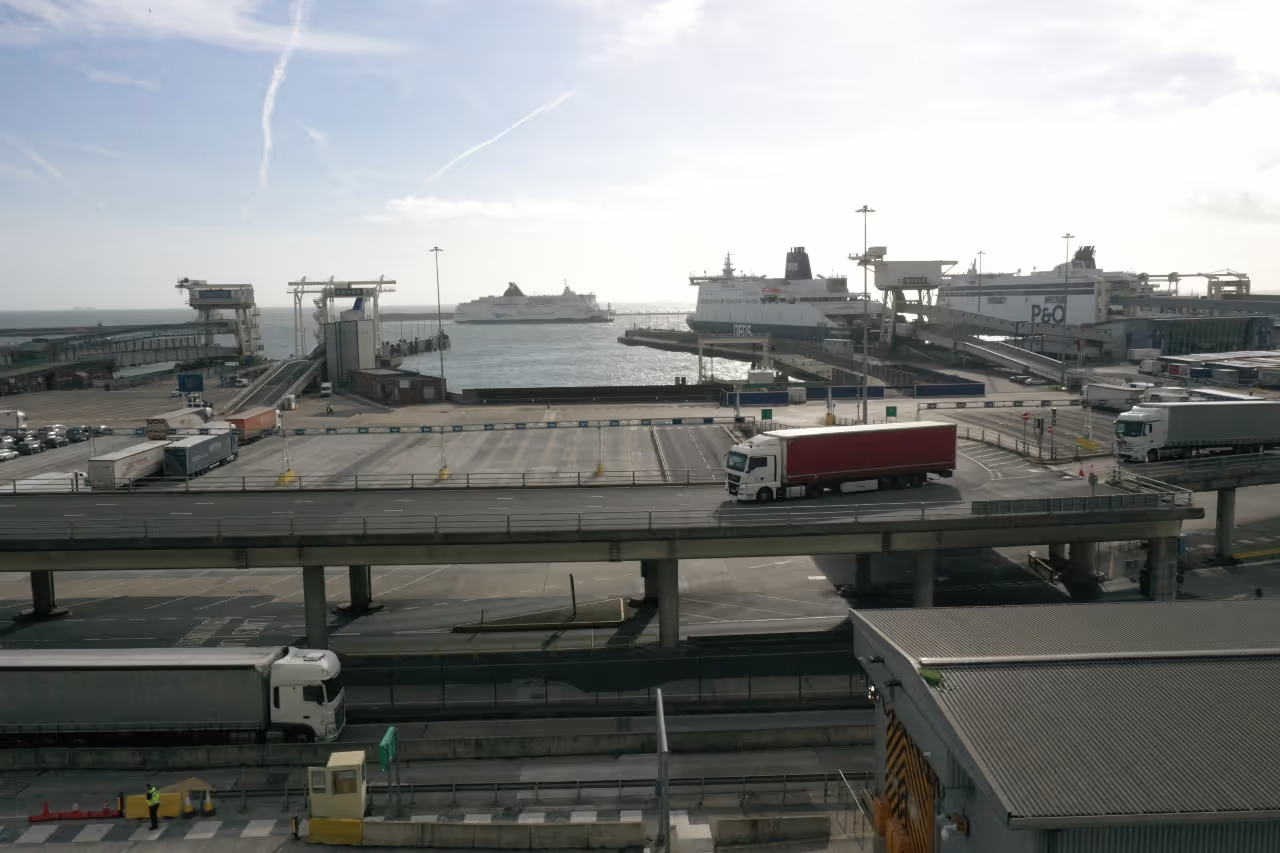

Demonstrating need
The need for this project in this location is founded on three fundamentals:
Firstly, the M20/A20 corridor is a critical national freight corridor providing a direct connection between the Port of Dover, the Channel Tunnel, the M25 and the Dartford Crossing.
It is considered the most preferable route for port-bound HGV traffic, as the alternative M2/A2 route to the port reduces to a single carriageway between Lydden and Whitfield and is generally of a lower standard to the east of the Medway Towns.Secondly, the site’s proximity to the Port of Dover, the country’s busiest international ferry port, handling approximately 2.5 million HGVs a year.
Thirdly, there is an acknowledged lack of secure lorry parks in Kent
The 2024 National Planning Policy Framework (NPPF) reinforces the importance of ensuring sufficient overnight lorry parking, particularly in areas with known shortages – and that includes Kent. It aims to reduce the risks associated with HGVs parking in unsuitable locations due to a lack of proper facilities.
“The road haulage industry needs the right infrastructure and facilities to maintain the safety of the road network and ultimately reduce the likelihood of freight crime occurring. Most notably, this needs to include the provision of adequate lorry parking spaces and driver facilities.”
Supporting a nationally significant industry
The road transport industry is central to the UK’s supply chain and economic growth.
Road freight moves 89% of all goods and 98% of agricultural and food products. In total, the road haulage industry contributes £13.5 billion to the economy,
5.6% of the UK’s total GDP.
Freight is also an economic multiplier, with every £1 generated by the logistics industry generating £3 elsewhere in the UK economy.
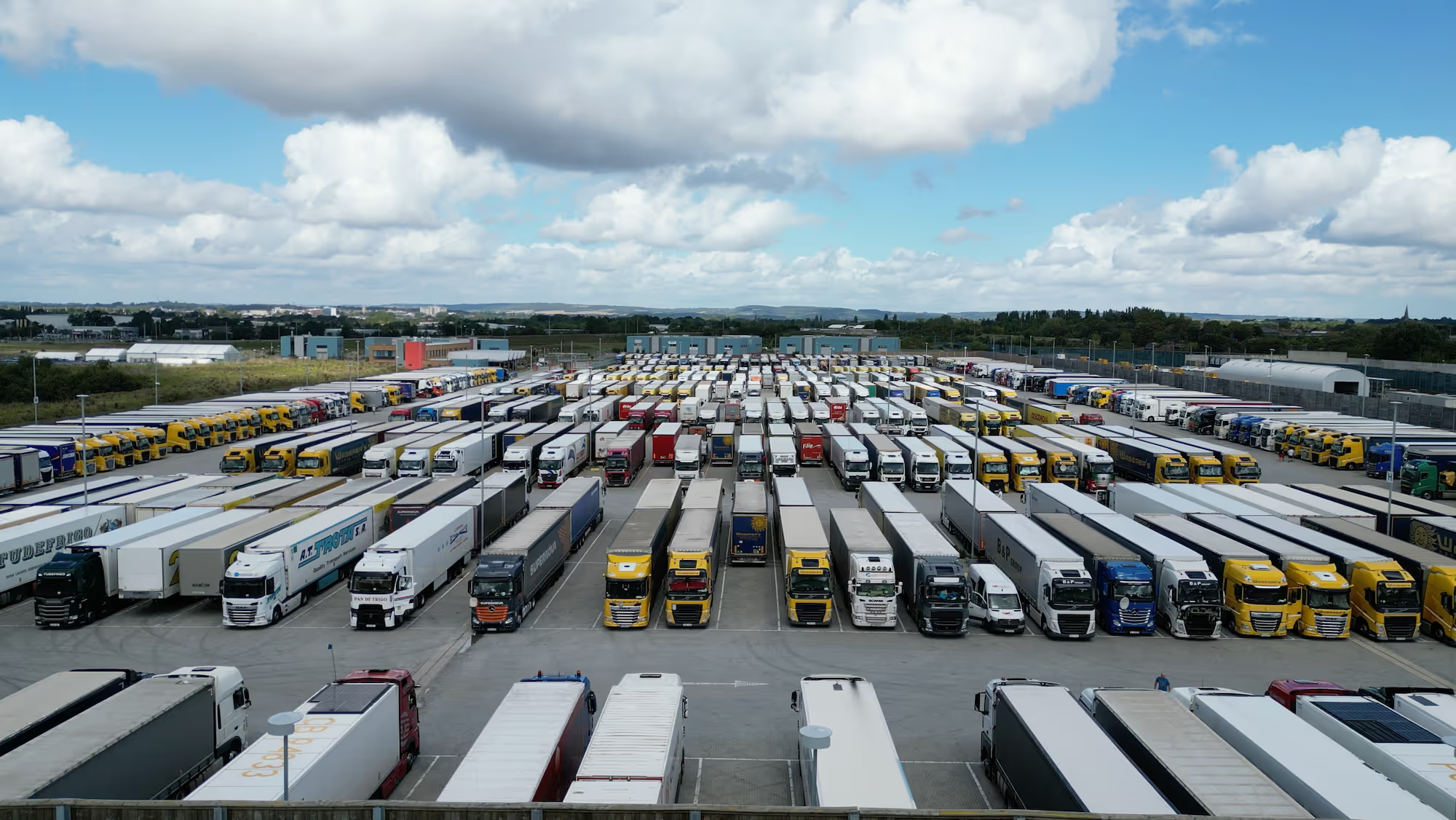

Helping to meet the national requirement for secure HGV parking
Nationally, the Road Haulage Association (RHA) considers there is a shortage of around 11,000 lorry parking places. With much of the allocated overnight lorry parking not secure and insufficiently lit, lacking effective CCTV and almost always being publicly accessible.
The absence of dedicated lorry parking facilities forces HGV drivers to seek alternative options, resulting in informal parking across the region.
According to a 2024 survey by Transport Focus, fewer than four in 10 lorry drivers said they were ‘satisfied with the number of stopping places available in the UK’. The independent watchdog for transport users, says: “When no services are available, drivers can be forced to park in laybys or industrial estates, which lack basic amenities like toilets and have little to no security.”
Inadequate security leads to concerns about cargo theft and personal safety, contributing to stress and anxiety and exacerbating mental health issues.
Meeting the region’s need for more lorry parks
Kent County Council (KCC) and Dover District Council (DDC) both identify a significant shortage of suitable lorry parking facilities in the region in their respective Transport and Local Plans.
KCC’s latest Local Transport Plan seeks to improve resilience of the M20/A20 and relieve congestion to the Port of Dover, while recognising the importance of traffic management through “ensuring suitable vehicle management facilities exist across the corridor”.
The Dover Local Plan also identifies the need to provide overnight lorry parking, due to the “significant numbers of HGVs parked inappropriately overnight” and signals DDC’s commitment to enabling delivery of development through supportive planning decisions.
The Department for Transport’s (DfT) National Lorry Parking Survey identifies a shortfall of over 4,000 HGV parking spaces across the SRN. This issue is particularly pronounced in the South East, where TfSE reports a current deficit of 1,528 overnight spaces, projected to rise to 2,774 by 2040. The DfT survey found existing facilities operated at an average 83% capacity across the SRN, reaching 94% in the South East.
A TfSE study in 2023 found that all truck stops on the M20 corridor were overcapacity and four of eight on the A2/M2 were classed as being at ‘critical’ utilisation (more than 85%). This is borne out by our experience at Ashford International Truckstop where we regularly operate at over 100% capacity (peaking at 118% last year) and turn away more than 500 lorries a week.
TfSE estimates approximately 77% of HGV parking at night takes place on the SRN, just 36% of lorries park in truck stops, compared to 34% in laybys and 30% on industrial estates. The drivers’ selection of parking areas is driven primarily by immediate availability and proximity to the SRN – which demonstrates why the Court Wood truckstop proposals are so appropriate.
A separate annual survey by KCC that has been carried out every June and September since 2017 to date found that on average there are 660 lorries parked every night on the county’s road network (public highway, laybys, industrial estates, verges etc). On one night 875 lorries were observed. The provision of additional overnight lorry parking is a strategic priority for the council with a consensus that the county needs an extra 1,000 HGV parking spaces in the immediate term.
Recent planning decisions
A smaller lorry park right on the edge of the Kent Downs National Landscape at Wrotham, near Sevenoaks was recently granted planning permission on appeal after the Planning Inspector concluded it should go because of the “economic, social and environmental benefits of the proposal”. These included “important public benefits which would support the freight and logistics sector, improve safety on the SRN and provide essential welfare facilities for lorry driver

Consistent with the Port of Dover’s plans
The Port of Dover handles £144bn of trade per year. Annually, more than 2m freight vehicles pass through it, with an estimated 75% of this traffic travelling to or from Dover via the M20/A20. This volume of traffic is set to grow.
For more than a decade, Operation TAP has been put in place. In conjunction with support from the previous Government’s Levelling Up Fund, the Port is improving its capacity to manage outbound HGVs and to remove the impact of TAP.
However, in the event of future severe disruption – for example bad weather or industrial dispute – there remains the potential for backlogs to build up, requiring TAP to be initiated. Past experience shows this would trigger widespread traffic congestion in Dover and further afield, and bring other problems including disruption to businesses, a loss of tourism, damage to the road network from illegal parking, increased waste discarded by drivers and greater opportunities for HGV crime.
A 600-space lorry park would help support the resilience of the Port of Dover in the long term, and take large volumes of traffic off the network immediately.
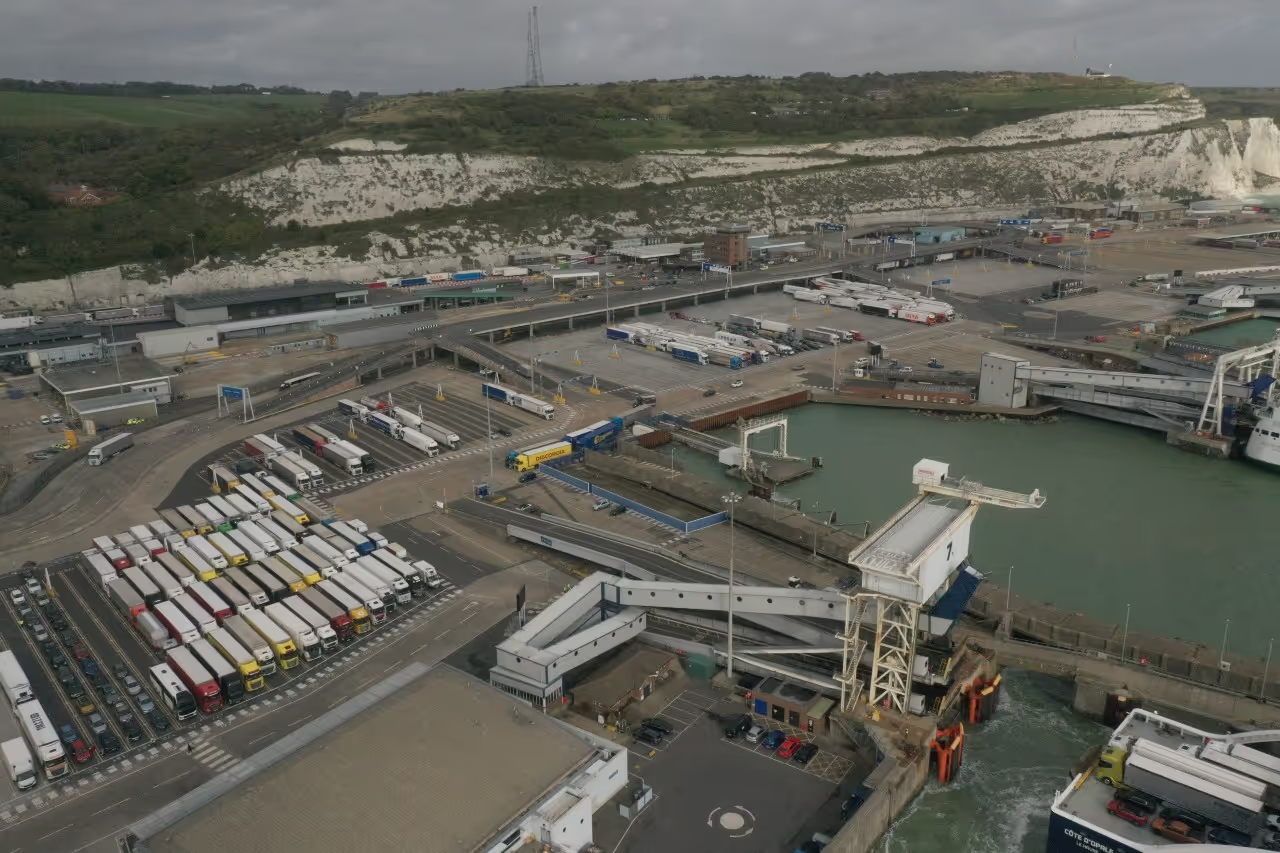
Supporting the freight operation of the Channel Tunnel
Of the outbound HGVs parked overnight at Ashford International Truckstop (AIT), approximately 60% are Dover-bound, with the remaining 40% travelling via the Channel Tunnel.
Providing an additional 600 spaces close to Dover and coordinating its operation with the AIT would strengthen the provision of secure HGV parking west of the Channel Tunnel and support its efficient management of 1.2m HGVs per year.
In addition, of the HGVs arriving from Europe and parking at AIT, over half entered the country via Dover – and could be served by the Court Wood Interchange truckstop if they need to stop to comply with their tachographs.